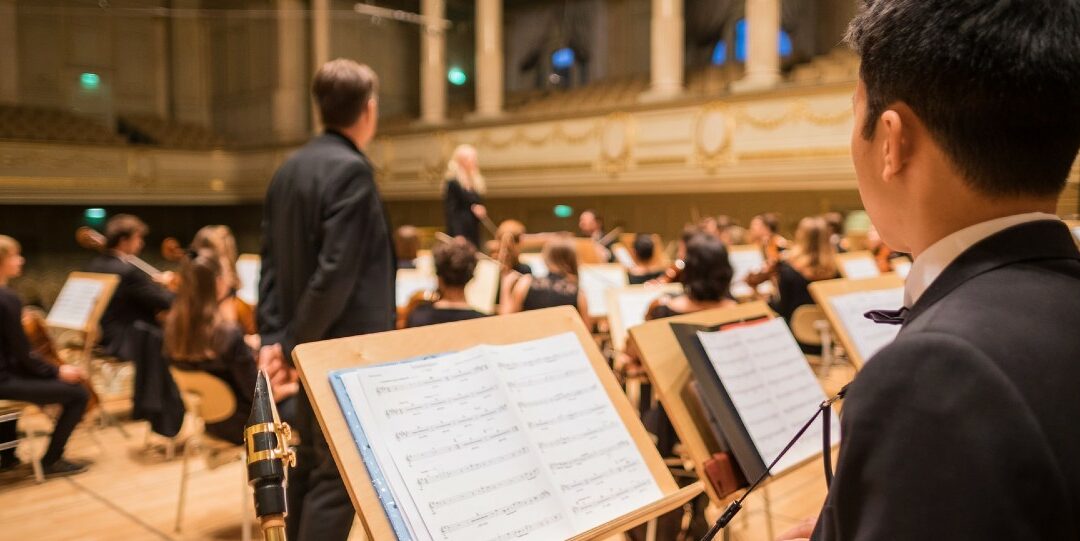
From young students to professional musicians

From young students to professional musicians


From young students

to professional musicians

Many parents asked me if their children were gifted in music. And if it was so, should they pursue music education to become professional musicians.

I had to warn those parents that becoming a professional musician takes a lot of hard work, endurance, and determination. You can not automatically presume that any musically gifted person has these qualities.

It was rewarding for me to find out that some of my gifted and hard-working students made music their career and achieved success. Here are a few stories of my students that I am proud of.

Seth H.

We moved to Vermont from Los Angeles in search of peace and quiet. Among my piano students in a small Vermont village was Seth, a tall, slim teenager who had an incredible musical talent. His parents owned the llama farm. Before I started teaching Seth, he took some piano lessons but “outgrew” his teacher. He studied with me for two years.

During his first year as my student, Seth was a senior at the high school. During the second year, he stayed home preparing for college. His dream was to attend the Oberlin college – one of the best conservatories in the country. We built an extensive repertoire of classical music, playing Beethoven, Chopin, Mozart, Bach, Schubert, and other great composers.

Seth was gifted not just in piano but also in singing. During his senior year, he performed as Seymour, the main character in ‘The Little Shop of Horrors.” His “poor” Miss Elena had to play the piano for the whole musical during the rehearsals and the performances.

Who knew that 25 years later, Seth will become a highly respected professional. He studied at the University of Southern California, Oberlin Conservatory, University of Colorado. He directs chamber singers, teaches conducting and composition.

This tall, slim teenager in glasses, as I remember him, is a Doctor of Musical Arts, in short  – Dr. H. Many of his choral compositions and arrangements were published and performed in the US and internationally.

Anthony A.

Anthony was my student since the “cradle.” At age two, he started attending my Music, Mommy & Me classes. At age three, he moved to the Music Workshop and graduated from this program at six.

By that time, I couldn’t find a space for teaching him piano myself. The family lived quite far from my school, and Anthony started piano lessons with a teacher who came to their house.

When Anthony started with me, he was the only child in the family. Later, I taught his younger siblings too, “in order of appearances”: Amber, Alessandra, and finally, Amadeo. All of them were “musical,” but none had the same abilities as Anthony.

The whole family loved music. Mom was German, dad – Italian. One year, mom asked me to give my concert lecture about Mozart for her husband’s birthday party. A small group of guests (3 couples) sat around the coffee table in the living room while I was playing piano and telling them about the husband’s favorite composer’s life.

After graduating from high school, Anthony studied composition at one of the colleges in Palm Beach, then moved to Vienna, Austria. He graduated from Prayner Konservatorium in 2019 with a degree in piano performance. Now Anthony is 25 years old, married, and lives in  Vienna. He is a concert pianist and a conductor.

Mason P.

Mason started my Music Workshop classes at age 3. From the beginning, I could see that this kid loved music and enjoyed performing for other people. When Mason graduated from the program, he started piano lessons with one of the teachers at my school and later joined our theater classes. Mason’s dad played piano and performed duets with his son at our school’s recitals.

Having two classes per week wasn’t enough for this talented boy and his “pushy” parents. They signed him up for voice and guitar lessons too. Needless to say, I saw Mason several times a week at my school.

Now Mason is in his early twenties. He created his own rock band, where he is a lead singer, guitarist, and songwriter. His field is an alternative rock that is more eclectic, original, and challenging than most popular music.

Mason produced a few videos and performed at many events in South Florida.  Without a doubt, he plans to perform at more prestigious venues. I am sure that with his talent and hard work, he will reach all his goals.

Brianna K.

Brianna started as an adorable two-year-old in my Music, Mommy & Me class. She loved every minute of it and was a great joy to teach. At age three, Brianna moved to a Music Workshop class. After graduating from the program, Brianna started violin lessons.

When Brianna was a preteen, she appeared on TV in The Ellen DeGeneres Show and The Oprah Winfrey Show. Later, she performed for the world-famous violinists Itzhak Perlman and Joshua Bell. I am sure that both of them gave her a lot of encouragement and professional advice.

At the age of 18, Brianna graduated from the Julliard School in New York. Who knows, maybe one of these days, she will become a world-famous violinist too.

 *****

I am proud and honored that I had these successful musicians as my students during their formative years!

Words from our happy
parents and students

“Thank you for a year full of beautiful and inspiring music! You are the best music teacher in the world, and I love you very much!”  – Arielita Morer

About Miss Elena
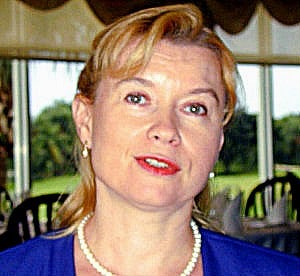
ELENA MIGUNOV was born in Moscow, Russia. She earned a Bachelor of Arts degree and teaching credentials at the First Moscow College of Music. In 1979, Elena emigrated to the USA and founded PRELUDE MUSIC STUDIO, the largest and most successful music school in Los Angeles. Among Elena's students were children and grandchildren of many celebrities, including Gregory Peck, Lucille Ball, Shirley Jones, O.J. Simpson, John Candy.
Two promising girls, two different mothers

Two promising girls, two different mothers


Two promising girls, two different mothers

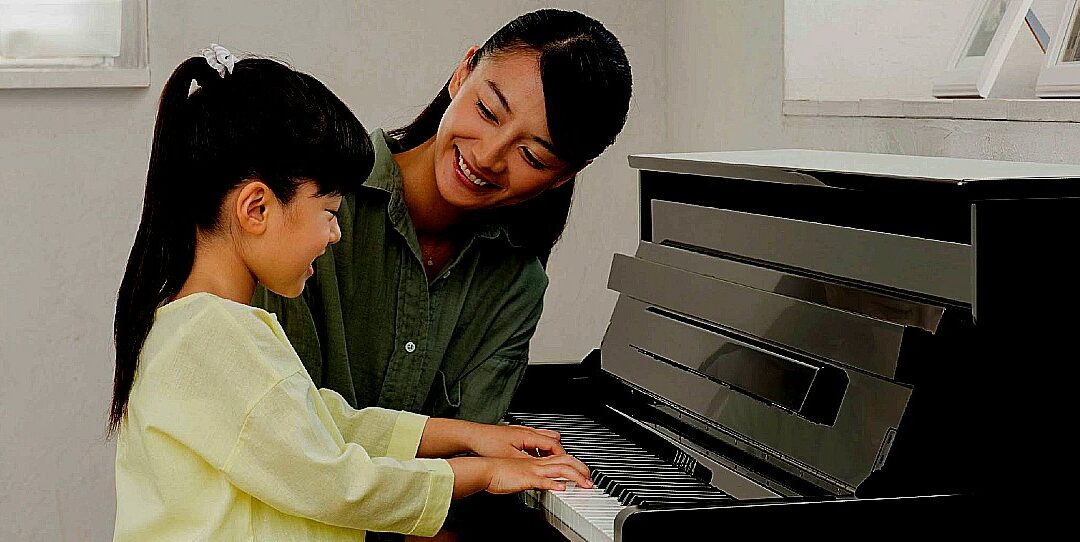
Natalie and Mona went to the same preschool, were in the same Music Workshop class, and simultaneously graduated from my program. These two girls were best friends.

Natalie seemed to be an “average” child: cute but not a beauty, bright but without any extraordinary abilities (or so I thought). She was always pleasant and polite.

Mona, on the other hand, was something special. Being very outgoing, Mona shined in my classes. Her parents came from Iran. Her mother, Armita, was a real beauty, her father – tall and handsome. Even when Mona was just six years old,  I could see that she will grow to be exceptionally beautiful.

 At that time, I taught group music classes at twelve private preschools and about twenty Music, Mommy & Me, and Music Workshop classes at my studio. Being an extremely busy teacher, I had to restrict the number of private students in my piano class. That’s why I planned to choose only Mona. However, when Natalie’s mom begged me to find a space for her daughter, too, I took pity on her and created an opening in my schedule.

Teaching Mona

Just a year later, I could see that my preferences were wrong. Mona, with all her brilliancy, was progressing at a slow pace. The reason? Her mom didn’t want to be bothered with supervising Mona’s piano practice. Armita was extra busy with her own activities. She didn’t work but volunteered all over the town, had an active social life, liked to shop, and spent a considerable amount of time in the beauty salon.

Besides, Armita was sure that she did more than enough for her daughter. She sent Mona to an expensive private school. She drove her child to my studio (ten miles one way on the busy Los Angeles streets). She paid costly piano tuition and gave me lavish presents for the holidays.

Right from the start, Armita told me that it is not her job to oversee her daughter’s practice. She said it with such authority that I, still a new person in this country (it was only 4 or 5 years since we arrived in the USA), couldn’t find words to argue my position.

After many attempts to explain to Mona’s mom how important it is to help the child practice piano, I gave up. I still continued teaching Mona, but she turned out to be just an average student despite all my hard work.

Teaching Natalie

When I started teaching Natalie privately, I discovered something exciting: this child spoke 3 languages! Her father came from Israel and made sure that Natalie could speak Hebrew. Her mom was Swiss and spoke to Natalie only in Swiss German.

At home, Natalie spoke Hebrew to her dad and Swiss German to her mom. When I made this discovery, I understood that I have a gem on my hands. I already knew that children who know more than one language can handle the language of music much better.

This child had excellent concentration. With guidance from her strict mom, Natalie practiced every day, which made a big difference. By the end of the year, Natalie progressed enough to be ready for her first piano recital.

I taught these two girls for two years in my Music Workshop classes (from age 4 to 6), and for three years, I taught them piano (from age 6 to 9) until we moved from Los Angeles. By that time, Natalie finished level 5 piano books while Mona struggled with level 3. Who made all the difference? Their moms, of course!

I wish I could continue teaching Natalie after our move, but there was no Skype at that time.

Words from our happy
parents and students

“Thank you for a year full of beautiful and inspiring music! You are the best music teacher in the world, and I love you very much!”  – Arielita Morer

About Miss Elena

ELENA MIGUNOV was born in Moscow, Russia. She earned a Bachelor of Arts degree and teaching credentials at the First Moscow College of Music. In 1979, Elena emigrated to the USA and founded PRELUDE MUSIC STUDIO, the largest and most successful music school in Los Angeles. Among Elena's students were children and grandchildren of many celebrities, including Gregory Peck, Lucille Ball, Shirley Jones, O.J. Simpson, John Candy.
I played on Edvard Grieg’s piano

I played on Edvard Grieg’s piano

I played on Edvard Grieg’s piano

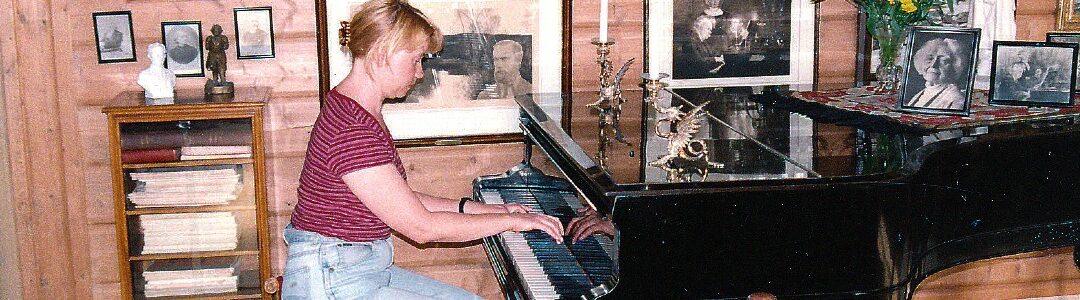
One day I was lucky to play on Edward Grieg’s grand piano “Steinway.” Grieg was my favorite composer when I studied in music school in Russia and later in music college. Could I imagine at that time that I would be able to see the personal piano of one of the world’s greatest composers and even have an opportunity to play on it?

It happened during our trip to Norway. Traveling is our passion. My husband and I traveled to 74 countries. We have a website, GreedyTravelers.com, where we write about our journeys worldwide.

After visiting so many parts of the world, Norway is still one of our favorite countries. When people ask us which countries we like the most, our answer is always the same: Norway and Japan!

During our two-week trip around Norway, we visited Bergen. It is the second-largest city in Norway after the capital Oslo. Edward Grieg lived in this city as a child, and later, he settled there again with his wife.

From Bergen, we went to Troldhaugen, to the Grieg’s summer villa. The composer lived there for twenty-two summers. We walked around the entire estate, admiring the beautiful views of the mountains and the fjord, and looked into the window of the Grieg’s tiny cabin, where the composer created his famous compositions.

We visited Grieg’s house in the late afternoon. It was empty, with no visitors. The guide took us on a tour around the house. In the living room, we stopped in front of the “Steinway” grand piano. According to the sign, the instrument was presented to Grieg for his silver anniversary in 1892.

It stands behind the rope, so you are not allowed to touch the instrument. The guide told us that Grieg’s piano is in good shape, tuned regularly, and used only for special occasions.

My husband told the guide that his wife is a pianist educated in Russia and living in the United States. After that, he had the nerve to ask: “Since the museum is empty, could my wife play a little on this piano?”

The guide hesitated and said: “You know what? You cannot do it while there are visitors at the museum. Let me close the front door for a few minutes, and then your wife can play the Steinway. But, please, not for long.”

I don’t remember what exactly I played, but it was one of the pieces by Grieg.

By that time, I had already created a couple of dozen lecture-concerts about the great classical composers. I gave these concert-lectures at many country clubs in South Florida, including Mar-a-Lago, at many social events, and even at the United States’ Embassy in Moscow.

One of the lectures was about Edvard Grieg. This lecture included several of his compositions. I still could play some of them by heart.

We spent several hours at Grieg’s estate. In the evening, we attended a live performance at the concert hall. While listening to Grieg’s music, we enjoyed the beautiful view of the fiord visible through the floor-to-ceiling windows installed behind the stage.

I believe any musician would feel fortunate to play the instrument which belonged to the world-famous composer. I will remember and cherish that incredible moment for as long as I live.

Words from our happy
parents and students

“Thank you for a year full of beautiful and inspiring music! You are the best music teacher in the world, and I love you very much!”  – Arielita Morer

About Miss Elena

ELENA MIGUNOV was born in Moscow, Russia. She earned a Bachelor of Arts degree and teaching credentials at the First Moscow College of Music. In 1979, Elena emigrated to the USA and founded PRELUDE MUSIC STUDIO, the largest and most successful music school in Los Angeles. Among Elena's students were children and grandchildren of many celebrities, including Gregory Peck, Lucille Ball, Shirley Jones, O.J. Simpson, John Candy.
How I handle challenges of teaching piano by Skype

How I handle challenges of teaching piano by Skype

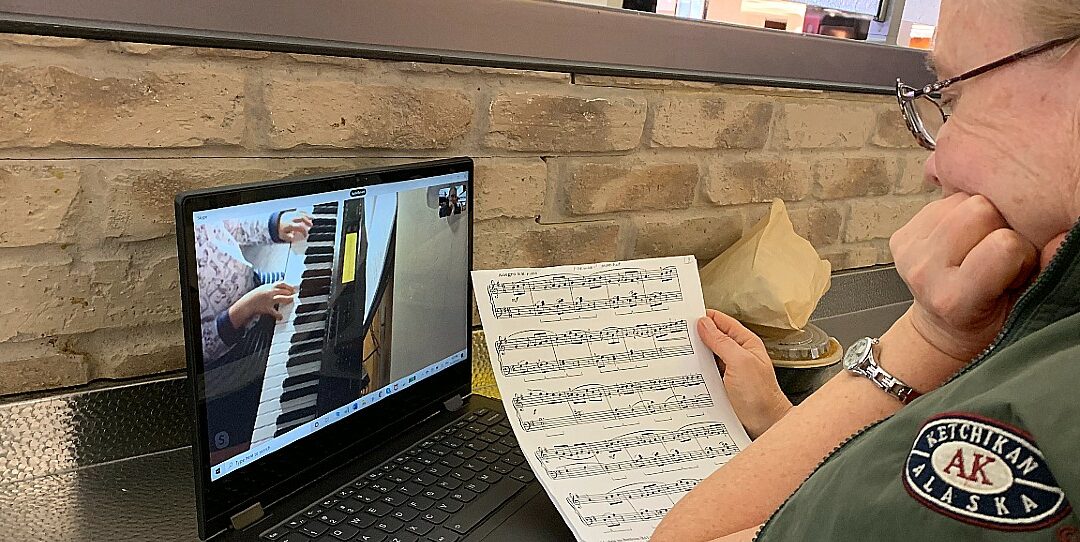
In this photo, I am teaching my piano student by Skype while waiting for the flight to Egypt. The place: JFK airport, New York.


How I handle  challenges of teaching piano by Skype 

I taught piano by Skype since 2012 from our summer house in Michigan. Before that year, when we traveled around the United States or went abroad, I gave my piano students a long list of practice pieces. 

Who knew that just eight years later, because of COVID-19, Skype lessons will be the only way for me to teach. Some music teachers use Zoom, but the sound quality is better on Skype.

Advantages of teaching by Skype

Convenience for adult students

 Skype saves a lot of time for adult students because they don’t have to drive to my studio for the lesson. They can take their class at home after work, or early in the morning before leaving for work, or on the weekend.

 My students can live anywhere

I have a talented, hard-working student who lived 50-60 minutes away from me. His father brought him to me every Sunday, on his only day off.

Occasionally, because of some family obligations, this dad couldn’t bring his son to my house. Our solution was to have Skype lessons on such days. We switched to Skype permanently after I moved from Florida to Washington, DC. I still teach this boy and all my Florida piano students by Skype.

Now, I do not worry if some of my students will move out of town, state, or the country. I’ll continue teaching them as long as they need me.

I can teach by Skype from any place (as long as there is Internet service)

Once, because of a tornado, we lost power in our summer house in Michigan. The next morning, we saw many fallen trees and damaged houses (luckily, ours was spared). We realized that the county would not be able to restore electrical power for a long time. The same day we packed our car and drove home to Florida.

I did not cancel the lessons scheduled for that day. I managed to teach my students by Skype from a hotel room.

I even taught piano from the JFK airport while waiting for the flight to Egypt.

I finished the last class just before boarding. By the way, JFK airport has excellent Internet service.

When our family obligations took us to Russia, I taught all my students from the Moscow apartment we rented for two months. I was five-and-a-half thousand miles away from my Florida students, but they did not miss a single lesson.

I can keep a stable schedule

In the past, we had a bustling school (600 students, 40 teachers, 10 private rooms, 4 large rooms for dance, theatre, my Music Workshop classes) in South Florida. Occasionally, we had a situation when parents forgot about their child’s private music lesson. Some mom would call the school and complain that the receptionist didn’t call to remind her about the lesson’s time.

Our school’s dance rooms, private studios, waiting room, snack room, and playroom were filled with parents and children. At any given moment, there were at least 60 people on the premises. Our receptionists couldn’t notice that someone was missing his/her private lesson.

Nowadays, I teach by Skype from home, and it is much easier to keep lessons on schedule. I always ask my students to start at the exact time. If a class is at 5:00 o’clock and I did not get a call at 5:01, I text my student that it is time to start. With my 10 minute break between students, all lessons start on time even if someone began class a few minutes later.

My students can practice piano before or immediately after the lesson

Since students do not commute to my studio, they can use the saved time for extra practice before the lesson. Also, immediately after the class, a student can go over the new material. It helps students to retain what I taught them.

With Skype, I can teach any level, including beginners

I was sure that I could teach by Skype only the intermediate or advanced students. It was a surprise for me when I started teaching Noah, the brand new six-year-old beginner.

Just eight months later, he was ready to play three songs in our December piano recital (by Zoom, of course). The key to success with such a young beginner was his father’s participation. Noah’s dad sat next to him, wrote down the homework, supervised practice. This student is a success!

Of course, the adults’ help is always essential, but it is crucial for lessons by Skype!

I do not share germs and viruses with my students

Even with a mask, teaching in-person could be unsafe for students and teachers. Now, in the time of Covid-19, teaching by Skype is the only option.

How I handle challenges

of teaching piano by Skype

Noise in the house

In one (close-knit but noisy) family, the younger brother, grandma, and uncle talked in loud voices.  It did not distract me, but I worried about my student. When I realized that he could focus despite the background noise, I relaxed. It also helped that they spoke in a different language.

Slow or unreliable Internet

The teachers should have a fast Internet connection. It’s easy to check your internet speed. One of the ways to do it, go to speedtest.net.

If my Internet connection is unsatisfactory, I ask a student if somebody else in his household simultaneously uses Skype. 

Once I couldn’t continue the lesson with my teenage student because of constant Internet service interruption. This high-schooler was good with computers but couldn’t figure out what was wrong. I suggested rescheduling the lesson. 

Just five minutes after we said goodbye, this student called me back. He discovered that his younger brother was skyping someone else during our lesson. 

Teaching music theory by Skype

In the beginning, when I started Skype lessons, I thought that it was impossible to teach music theory. Later, I figured out how to do it.

I assign a page from the theory book to the student.  After he finishes working on this page, he scans it (or takes a picture) and emails it to me. During the next lesson, I correct mistakes if there are any. 

Level of voice

Another challenging thing for teaching by Skype is that I have to speak up louder. Sometimes my throat feels dry after teaching several Skype lessons in a row. To soothe it, I keep a glass of water nearby. 

Writing down fingering

During a lesson in person, I need to write fingering (numbers of fingers to use for certain notes) for the student from time to time. Obviously, teaching by Skype, I can not write in the student’s book. To solve the problem, I have to do some preparatory work.

To help the student with fingering, I look at the copy of the music in my book and write in the fingers I think are missing or not as good as I would like them to be.

Before figuring out a brand new piece with students, I ask them to write in the fingers’ numbers with a pencil. Usually, it is not too many, many just 5 or 6 numbers here and there. The correct fingering will help a student to play in the correct hand position.

To help students to find the correct note on the page, I will say: “Line 1, measure 2, right hand – the first note needs to be played with finger number 5”. Or: “Line 3, measure 4, left hand – note B has finger number 3. Change the number 3 to number 4”. This way, when a student sight reads a brand new piece, he plays with correct fingers.

Homework

When I taught in person, I wrote down the numbers of pages in the student’s assignment book by myself. These days I prepare for each Skype lesson in advance and write down each student’s assignments in my journal.

Playing duets

I love playing duets or two-piano compositions with my students.  Unfortunately, it is impossible to do it via Skype.

Live recitals

One of the things I’m not crazy about is Zoom recitals.  Where are those joyful days when my pupils performed on the stage? Where are my nicely dressed students, whose families brought flowers and applauded after each performance? Unfortunately, during Covid-19,  recitals by Zoom are our only option.

*****

Teaching piano by Skype has pluses and minuses. However, the most challenges of this way of teaching can be easily overcome. As to a few disadvantages, I can live with them.

Words from our happy
parents and students

“Thank you for a year full of beautiful and inspiring music! You are the best music teacher in the world, and I love you very much!”  – Arielita Morer

About Miss Elena

ELENA MIGUNOV was born in Moscow, Russia. She earned a Bachelor of Arts degree and teaching credentials at the First Moscow College of Music. In 1979, Elena emigrated to the USA and founded PRELUDE MUSIC STUDIO, the largest and most successful music school in Los Angeles. Among Elena's students were children and grandchildren of many celebrities, including Gregory Peck, Lucille Ball, Shirley Jones, O.J. Simpson, John Candy.

My thoughts about the Suzuki Method

My thoughts about the Suzuki Method


My thoughts about the Suzuki Method

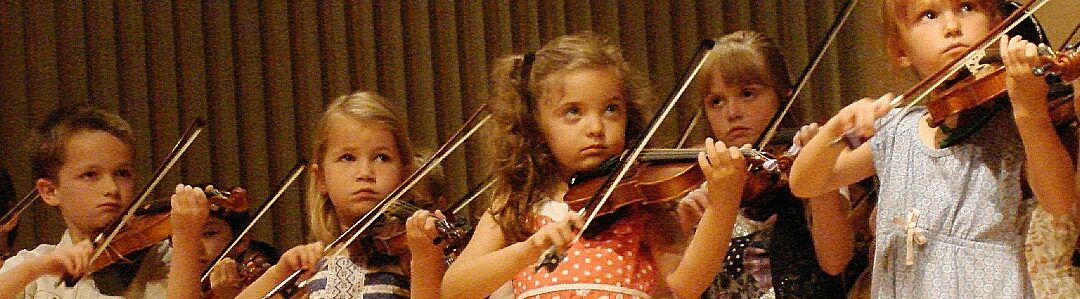
Everyone heard of the Suzuki method. But not many people know how this system is taught and what the results are. According to Suzuki, toddlers can learn to play an instrument (mostly violin) by age 3. This method requires a lot of listening, imitation, and constant repetition.

I never learned or taught this technique, but I had several former Suzuki students, and I talked to some Suzuki teachers. In those teachers’ opinions, this method works well for the string instruments, but not necessarily for the piano. I am not going to praise the Suzuki system or criticize it. I’ll just give you my personal opinion.

I believe this method can be successfully taught in Japan or some other Asian country. Still, it can be a failure in the U.S. or Europe because of profound differences in cultures, traditions, national character.

The Suzuki technique requires constant parent participation, much more than any other teaching approach.  Before starting  this method,   the parents should ask themselves these questions:

  • Do I have enough patience, discipline, and devotion?
  • Can I spend many hours a week to drill my child?
  • Does my child have enough patience and discipline?
  • Since the Suzuki method requires so much time, am I ready to quit my job and pull my child out of other classes?

My own experience with former Suzuki students showed that many children were poor sight-readers even after years of learning. Some of them were good piano players, but they were helpless if they had to figure out a new composition by themselves.

About Miss Elena

ELENA MIGUNOV was born in Moscow, Russia. She earned a Bachelor of Arts degree and teaching credentials at the First Moscow College of Music. In 1979, Elena emigrated to the USA and founded PRELUDE MUSIC STUDIO, the largest and most successful music school in Los Angeles. Among Elena's students were children and grandchildren of many celebrities, including Gregory Peck, Lucille Ball, Shirley Jones, O.J. Simpson, John Candy.